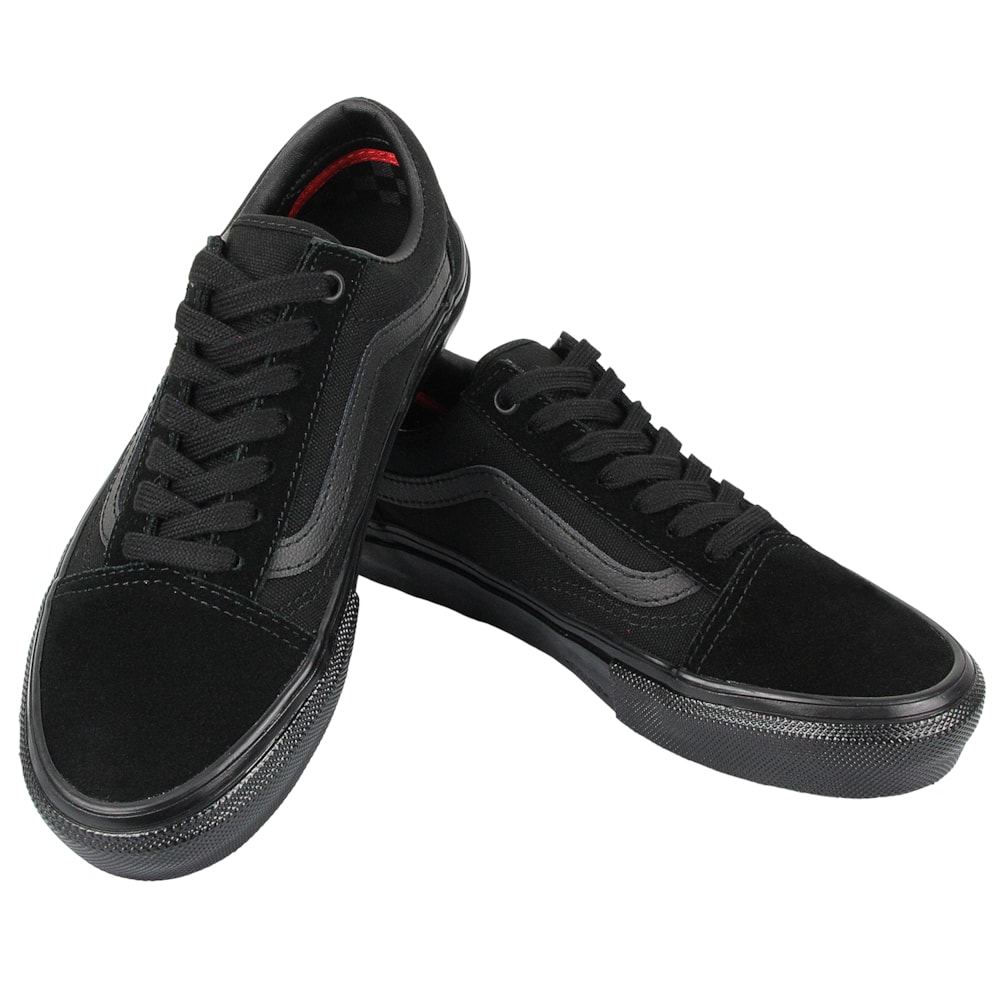
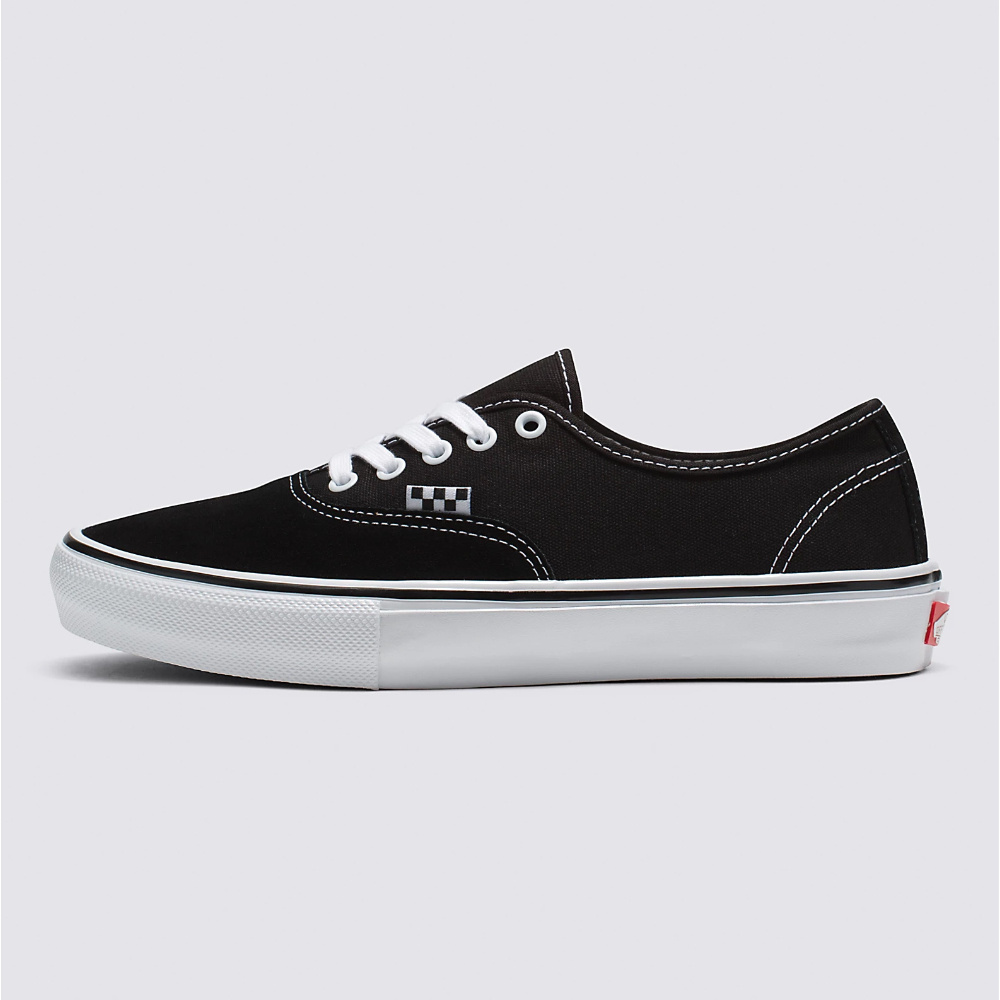
Old Skool adds structure; Authentic removes it
The cleanest distinction is visible before either shoe reaches the board. Skate Old Skool uses more paneling and a more built-up side profile, while Skate Authentic reduces the upper to a simpler low lace-up shape. That extra Old Skool material can improve hold and place more durable material around common wear areas. Authentic answers with lower visual and physical bulk. Both preserve classic Vans vulcanized character, so this is not a choice between technical shoe and lifestyle shoe when equivalent skate versions are compared. It is a choice about how much upper the rider wants.
Old Skool is the safer abrasion shortlist
For repeated ollies and flip tricks, Old Skool’s layered side construction and common suede coverage give it a clearer route to managing abrasion. That advantage must be verified on the selected colorway; material can change. Authentic has fewer panels and can skate well, but a light canvas variation exposes the upper more directly to grip tape. A rider whose previous shoe opened at the flick side should begin with Old Skool. Someone who cruises, skates lower-abrasion terrain, or accepts repair may prefer Authentic’s simplicity. The wear map, not the stripe, should decide.
Authentic feels less present around the foot
Skate Authentic is compelling when the rider wants a low opening, uncomplicated flex, and an upper that does not add much structure. This can make board movement feel immediate and casual wear effortless. The same minimalism provides less collar presence and fewer layers between the foot and board contact. Old Skool can feel more anchored through its panels and opening. Neither sensation is universally better. A skater who dislikes upper resistance may choose Authentic; one who values a held-in feel may accept Old Skool’s extra material.
Fit can overturn the construction logic
Old Skool padding and panel shape may secure one heel while pressing another instep. Authentic’s simpler opening may suit that second foot or may allow too much heel movement. Try both in equivalent sizes with the same socks. The toes should remain natural, and neither shoe should require excess length to gain width. Break-in can soften suede or canvas but cannot move the flex point to the correct place if length is wrong. If fit disagrees with the expected performance winner, trust fit. A technically appropriate shoe that slides inside cannot deliver consistent board control.
Impact protection is a shared limit
Even when skate-focused versions include improved insoles or rubber, both models live near Vans’ classic vulcanized tradition rather than the deepest technical cupsole lane. Riders repeatedly skating stairs and gaps should compare a structured alternative or a Vans Wafflecup direction before assuming Old Skool’s extra upper solves underfoot impact. Between these two, select based on fit, abrasion, and desired upper feel. Neither should be promoted as the universal maximum-protection answer. This shared boundary is important because a comparison can exaggerate small differences while ignoring the larger category both shoes occupy.
Casual use makes the decision closer
Away from the board, both silhouettes are established casual choices. Authentic is visually quieter and may pair easily with a broad wardrobe; Old Skool gives the side stripe and panel contrast more presence. Walking comfort remains individual because both retain a flat skate-oriented platform. If the pair will be kept clean for everyday wear, durability against grip tape may matter less than heel fit and material preference. If one pair must skate and remain presentable, darker suede Old Skool variations may disguise some use, but no color prevents visible abrasion.
The verdict by rider
Choose Skate Old Skool when the normal session demands stronger side-panel coverage, the foot benefits from more upper structure, or the rider wants the iconic striped profile. Choose Skate Authentic when minimal weight, uncomplicated flex, and a very clean low silhouette matter more than added material. Verify that both candidates are skate-specific versions, then match exact upper, size, and variation at Amazon. Keep both product paths available because each has a coherent winner. The comparison succeeds when a reader can explain the accepted compromise, not when one model is declared superior for everyone.
Lace exposure favors neither shoe automatically
Both models leave conventional laces in a region that can encounter grip tape, though foot angle and trick selection determine the actual wear. Old Skool’s additional eye-stay structure may place more material around the row, while Authentic’s reduced upper can feel cleaner and easier to inspect. Examine optional lace routes and the selected material rather than assigning a universal winner. A skater who regularly snaps one particular lace segment should use that location as evidence: compare where the segment sits on each shoe, and keep spare laces available during the first sessions.
Material matching makes the fairest head-to-head test
A suede Skate Old Skool against a light canvas Classic Authentic bundles several differences into one verdict: model, material, and performance line. A cleaner comparison holds as much constant as possible. Start with Skate editions, similar upper materials, the same size, and the same sock. Then the structural contrast becomes easier to feel: Old Skool's layered side and more present upper versus Authentic's reduced construction. If the exact colors do not offer equivalent materials, name that limitation. The available variations may still lead to a practical purchase, but they should not be used to make a universal claim about both silhouettes.
People also ask
Questions that extend this decision
Vans Skate Old Skool vs Authentic: Which is usually more durable, Skate Old Skool or Skate Authentic?
Old Skool generally has the advantage through paneling and common suede coverage, assuming equivalent skate-focused variations.
Vans Skate Old Skool vs Authentic: Which feels more minimal?
Authentic removes more upper structure and typically feels less present around the foot, while exact material still affects flexibility.
Vans Skate Old Skool vs Authentic: Are Classic and Skate versions interchangeable?
No. Reinforcement, insole, rubber, and upper material may differ. Compare complete product identities.
Vans Skate Old Skool vs Authentic: Which is better for hard landings?
Neither is the obvious maximum-impact choice. Repeated drops justify comparison with a structured cupsole or Wafflecup model.
Final verdict
Choose the tradeoff you understand.
The Old Skool offers more structure; the Authentic favors minimal weight and direct flex. Fit comes first, the repeated session demand comes second, and the exact current product identity comes third. Use Amazon to verify sizes and options without relying on stale price or stock claims.
As an Amazon Associate, we may earn from qualifying purchases.
Check current options on Amazon