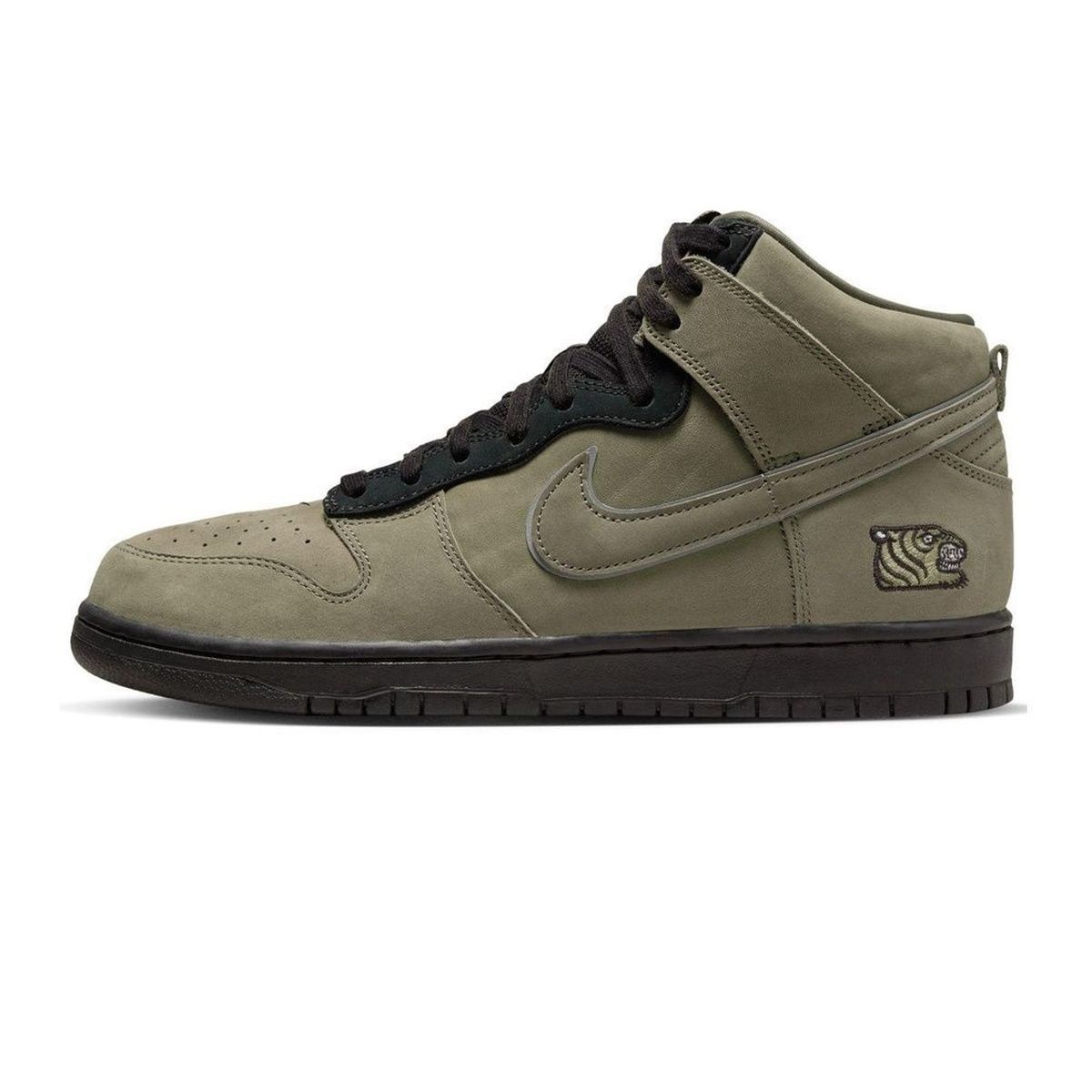
Let the shoe silhouette lead the outfit
Skate shoes already carry a strong visual language, from slim vulcanized lows to padded technical throwbacks. The easiest way to wear them naturally is to let that shape be the most deliberate element rather than surrounding it with every skate reference at once. A clean low-profile pair works with straight denim, chinos or uncomplicated shorts. A bulkier shoe needs enough room in the leg opening that the pants do not perch awkwardly on top. When proportions make sense, the outfit reads as personal style instead of a costume assembled from symbols.
The same principle applies to branding. Large logos, contrast stitching and signature graphics already add information, so the rest of the outfit can remain quieter. Minimal shoes leave more room for patterned pants or a strong jacket. There is no need to hide branding or show it deliberately; simply notice how many elements compete for attention. One clear focal point usually looks more considered than several unrelated statement pieces crowded together.
Match pant volume to shoe volume
Thin shoes can disappear beneath very wide, long pants, while a large padded shoe can overpower a sharply tapered ankle. That does not mean every outfit must be perfectly balanced; it means the imbalance should look intentional. Straight or relaxed pants usually pair easily with classic skate silhouettes. Wider pants can complement chunky shoes if the hem still clears the ground. With shorts, sock height becomes part of the proportion. Check the full outline in a mirror instead of judging the shoe alone from above, where every pair looks larger than it does to other people.
Use color without turning every piece into a statement
Black, white, gum and muted suede colorways are simple because they repeat colors already found in most wardrobes. Brighter pink, red, green or patterned skate shoes can work just as well when one nearby piece quietly echoes the color or the rest of the outfit stays restrained. Exact color matching is not required and can look forced. Think in families—warm, cool, neutral, faded or saturated. The shoe should feel connected to the outfit, but it does not need a matching hat, shirt and accessory to justify its presence.
Decide whether the pair is for skating, daily wear or both
A clean lifestyle pair and a working skate pair age differently. Grip tape creates holes, darkens uppers and shreds laces in recognizable zones. Some people like that wear; others want a cleaner pair for work, school or evenings. If appearance matters, rotate two pairs or reserve one colorway for non-skate use. This is not about hiding that you skate. It is a practical way to avoid expecting one shoe to remain presentation-ready while also absorbing repeated abrasion, sweat and hard landings. The same model can serve both roles when each pair has a clear job.
Wear heritage models without recreating an era head to toe
Old-school vulcanized shapes and puffy 1990s or 2000s models carry obvious references. They usually look strongest when combined with current basics rather than a literal period uniform. One heritage cue is enough: the shoe can provide it while the jeans, tee, overshirt or jacket stay simple. If you genuinely enjoy a full-era look, wear it with confidence, but do not add details solely to prove you understand the reference. Skate footwear has always moved between function, music, streetwear and everyday dress, so mixed influences are more authentic than rigid rules.
Lacing changes both fit and appearance
Loose lacing may create a relaxed look but can allow heel movement that makes walking or skating uncomfortable. Very tight lacing can distort a padded tongue and create pressure across the top of the foot. Start with even tension through the lower eyelets, then adjust the upper section for heel hold. Tuck lace ends only if they remain secure and do not create a pressure point. Contrasting laces draw attention; tonal laces keep the outline calmer. If the shoe only looks right when it fits badly, the colorway or silhouette is probably not the right choice.
Keep care appropriate to the material
A little wear suits skate shoes, but neglect is different from patina. Brush dry dirt from suede before it works into the nap, spot-clean canvas, and wipe rubber foxing with a method safe for the upper. Do not soak a pair or use aggressive heat to speed drying; both can affect shape and bonding. Remove the insoles when appropriate and let damp shoes air out. Clean shoes are not a requirement for good style, yet basic maintenance helps the color, proportions and material remain readable instead of collapsing into one damaged shape.
Personal comfort is the final styling rule
The most convincing outfit is one you can move through without repeatedly adjusting the hem, tongue or laces. Skate shoes are grounded in movement, so an outfit that prevents movement misses the point. Choose the pair that fits your actual foot, then build around its proportions with clothes you already wear. You do not need to skate to appreciate skate footwear, and you do not need to advertise a skater identity to wear it. Honest use, coherent proportions and comfort create a more natural result than any checklist of approved brands or pieces.
People also ask
Questions that extend this decision
How to Wear Skate Shoes Without Looking Like a Costume: Can skate shoes be worn with slim jeans?
Yes. Slim jeans tend to work most easily with lower-profile skate shoes. If the shoe is heavily padded, make sure the hem does not bunch tightly around the collar or make the foot look disproportionately large.
How to Wear Skate Shoes Without Looking Like a Costume: Do skate shoes work with shorts?
They do. Low-tops create a simple line, while high-tops and chunky models become a stronger visual feature. Sock height and short width influence the overall proportion more than a strict style rule does.
How to Wear Skate Shoes Without Looking Like a Costume: Should skate shoes look worn?
Natural wear is normal, especially on a pair used for skating. Deliberately damaging a clean pair is unnecessary. Let wear develop through use and replace or repair the shoe when function is compromised.
How to Wear Skate Shoes Without Looking Like a Costume: Can non-skaters wear skate shoes?
Yes. Skate shoes are footwear, not a membership badge. Choose them for fit, construction and style, and avoid pretending a personal skate history you do not have.
Final verdict
Choose the tradeoff you understand.
Wear the silhouette that fits your proportions and let the shoe's shape—not forced skate styling—do the work. Fit comes first, the repeated session demand comes second, and the exact current product identity comes third. Use Amazon to verify sizes and options without relying on stale price or stock claims.
As an Amazon Associate, we may earn from qualifying purchases.
Check current options on Amazon